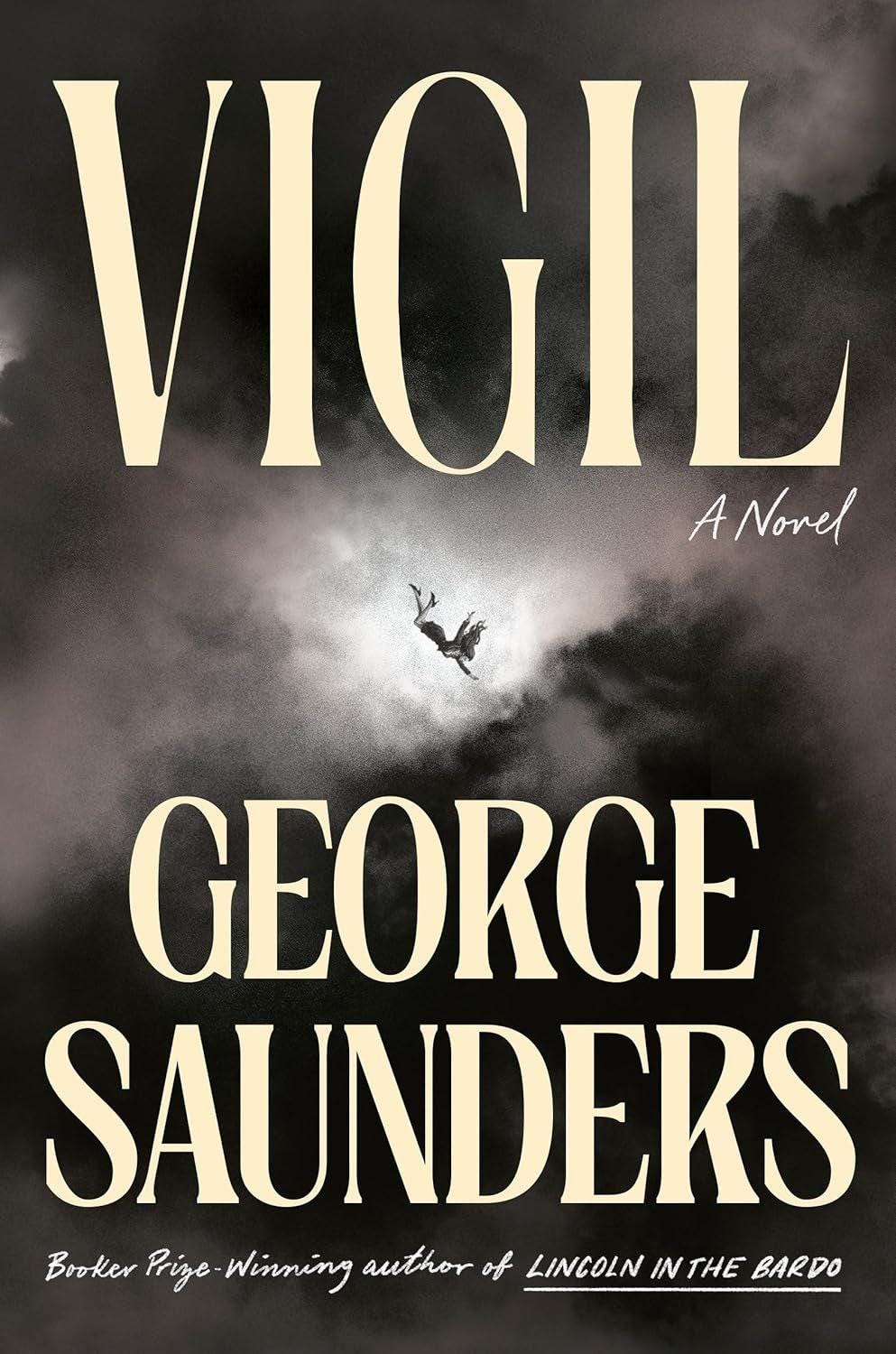
Review of Vigil By George Saunders
Climate Fiction meets buddhist philosophy
When Vigil begins, we meet the young, resolute spirit, Jill “Doll” Blaine, as she descends from the heavens. Her goal is simple; provide comfort to the dying in their last moments, and her latest “charge” (ethereal speak for client) is KJ Boone, a former oil tycoon. A man who even on his deathbed, manages to find ways to berate and harass anyone he deems inferior. At one point Boone leaves his wife in tears at his bedside and she exclaims “I finally understand how his employees feel”. But as much as Jill abhors this petulant little man, she takes her job as a spirit seriously, and is determined to provide him comfort in his final moments.
Initially we learn little of Jill, we’re only told that she was a devoted wife that died young. So young that she never had the opportunity to define her purpose, or experience life’s wonders. Yet as dispiriting as this is, she’s managed to find peace by settling into a fatalist philosophy. Her life and all the lives after her are predetermined by God, part of a grand design. After all, if she never died so young, then she would have never found purpose as a spirit, guiding doomed souls to the afterlife. Her thesis provides her with the necessary solace to continue with this important work, that is until she meets KJ Boone.
KJ Boone, the ambitious pigheaded boy from the Midwest, has been able to work his way up the corporate ladder to become the titan he is today. He’s schemed and strong-armed his way through industry and public opinion to build vast riches. Although he’s pilfered the planet and sold off our future, he’s done so in service of his family, so he feels no remorse. He is quick to write off or berate anyone that tells him otherwise, because if he truly lived life wrong, then why has he been rewarded so handsomely for it? Jill knows little of Boone or climate change at first, but over time she starts to understand the magnitude of his sins.
Although the novel and its implications are deeply unnerving, Saunders weaves in his trademark humor through a zany cast of characters. Nuclear scientists with juvenile humor, a ghost that literally goes up its own ass, a restless spirit known only as “The Frenchman”. Saunders has cited the Christmas Carol as a source of inspiration, and it clearly shows.
But by the end, when we reach the highly anticipated denouement, there is a troubling twist. One that will leave readers with more questions than answers. Vigil is a delightful and frustrating novel that resists giving an easy, satisfying answer to the problems we face. Instead of answering the troubling dilemmas of our time, Saunders trusts that you, the reader, can find both the wisdom and foresight to think about the big question. How do we deal with the end of the world, and the people that caused it?


