My Brilliant Friend By Elena Ferrante
A book review of a classic in the making
Warning, contains spoilers
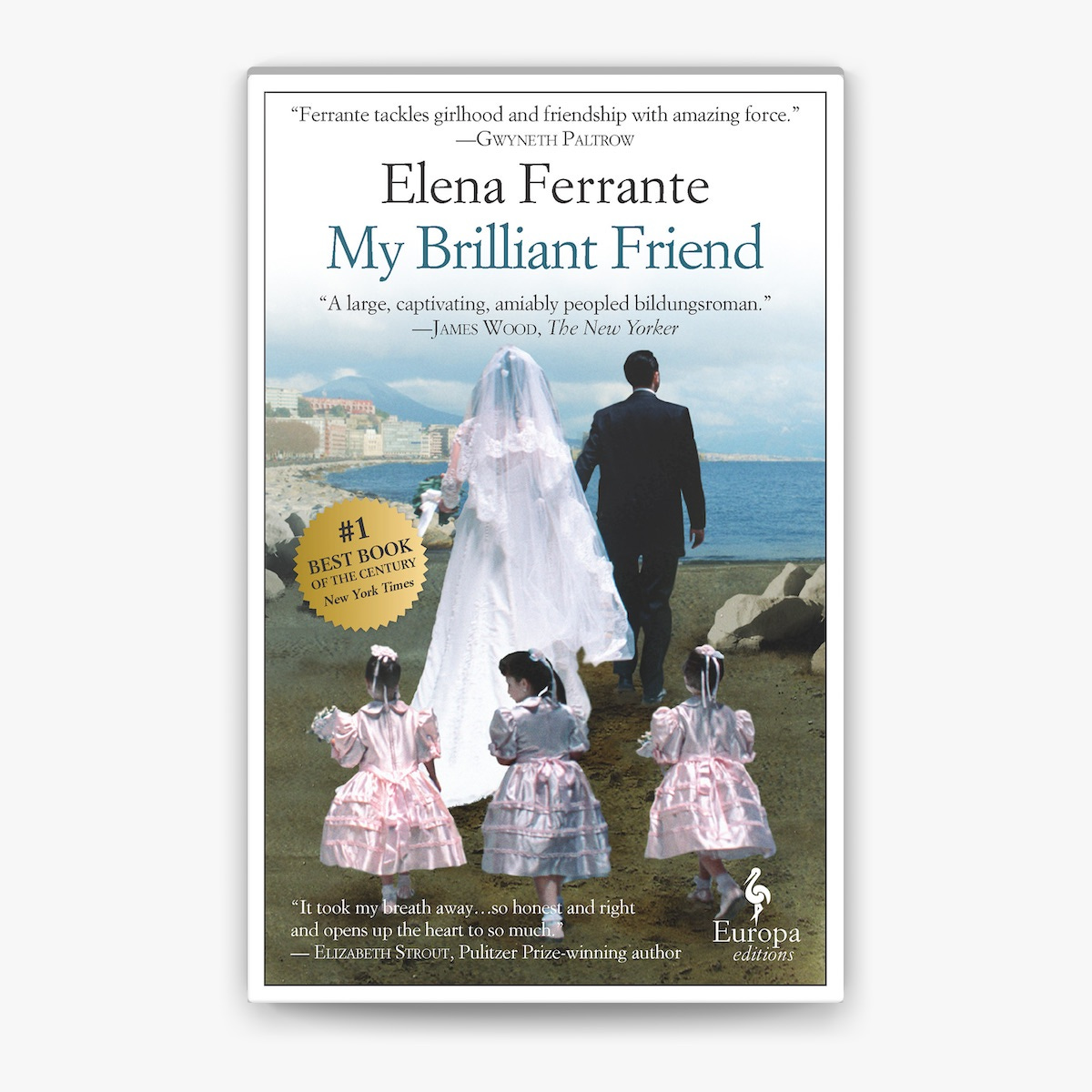
My Brilliant Friend centers the kinship between Elena, and Lila, her precocious friend, as they navigate patriarchy, puberty, and the violence of post-WWII Italy.
They don’t live in a time where intellect is rewarded among young, poor girls, so in order to attain an education, Elena and Lila must be crafty. They scrounge up pennies for used books, beg their parents to attend class, and sneak in time between chores and work to study. Thanks to their wit, determination, and the support of a few caring teachers, the two girls are able to attend a modest elementary school.
Initially they both excel, although it becomes clear Lila is the sharpest. She earns high marks in every subject, and has a vocabulary that far exceeds her years. Few of her peers can keep up, and for a brief moment everyone is in agreement that this extraordinary little girl will go on to achieve many great things. But as they get ready to enter into higher levels, Lila is prevented by her father from advancing any further and is instead relegated to the shoe shop where the rest of her family works. Although for a time she’s able to self-teach with books from the library, and give herself an education that mirrors that of her friend.
Elena meanwhile, continues on the more traditional route and receives an education that surpasses her friend, but because of the nostalgia of her youth, she considers Lila superior to her in both mind and temperament. Whenever she has to confront an authority figure, study for an exam, or write a letter, she asks herself, how would Lila do this? These two girls briefly follow a parallel trajectory, one receiving a formal education, the other an autodidactical one, at least until a man comes along and disrupts it all.
Lila, through little fault of her own, becomes coupled up with a pragmatic, enterprising grocer named Stefano, and though she cares little for the man, their relationship proves too convenient to disregard. Stefano’s money allows Lila and her family to escape poverty and acquire status in the neighborhood and she becomes both revered and hated by others in her community for her newfound wealth. She does little to ease the animosity, and instead becomes a debutante of sorts, and is seen routinely wearing the nicest dresses and dining at all the best restaurants. Like many others, Elena is skeptical of the arrangement, but reluctantly endorses it because there seems to be little opportunity otherwise for a poor, uneducated girl from Naples. Their friendship endures, but is sufficiently tested as Elena notices the many ways that her best friend has started to change. No longer is Lila interested in Greek, or politics, or Theology, now she only speaks of practical matters like clothes, weddings, and commerce. Through their conversations Elena discovers that although Lila still retains the cleverness of her youth, her mind is no longer as illustrious as it once was.
My Brilliant Friend demonstrates how education can serve as a faustian bargain for the poor. It helps you “succeed” in the world and grow in a myriad ways you can’t anticipate, but at the risk of alienating you from your childhood, and your community. No bond is safe, romantic, familial, or otherwise, from the specter of educational and class division. Elena sees this firsthand with her friend Lila as she’s transformed from an inquisitive, gifted young girl, into someone whose interests and curiosities have become effectively bound by the limits of domesticity. And in the end, she becomes the brilliant friend she believed Lila to be.


