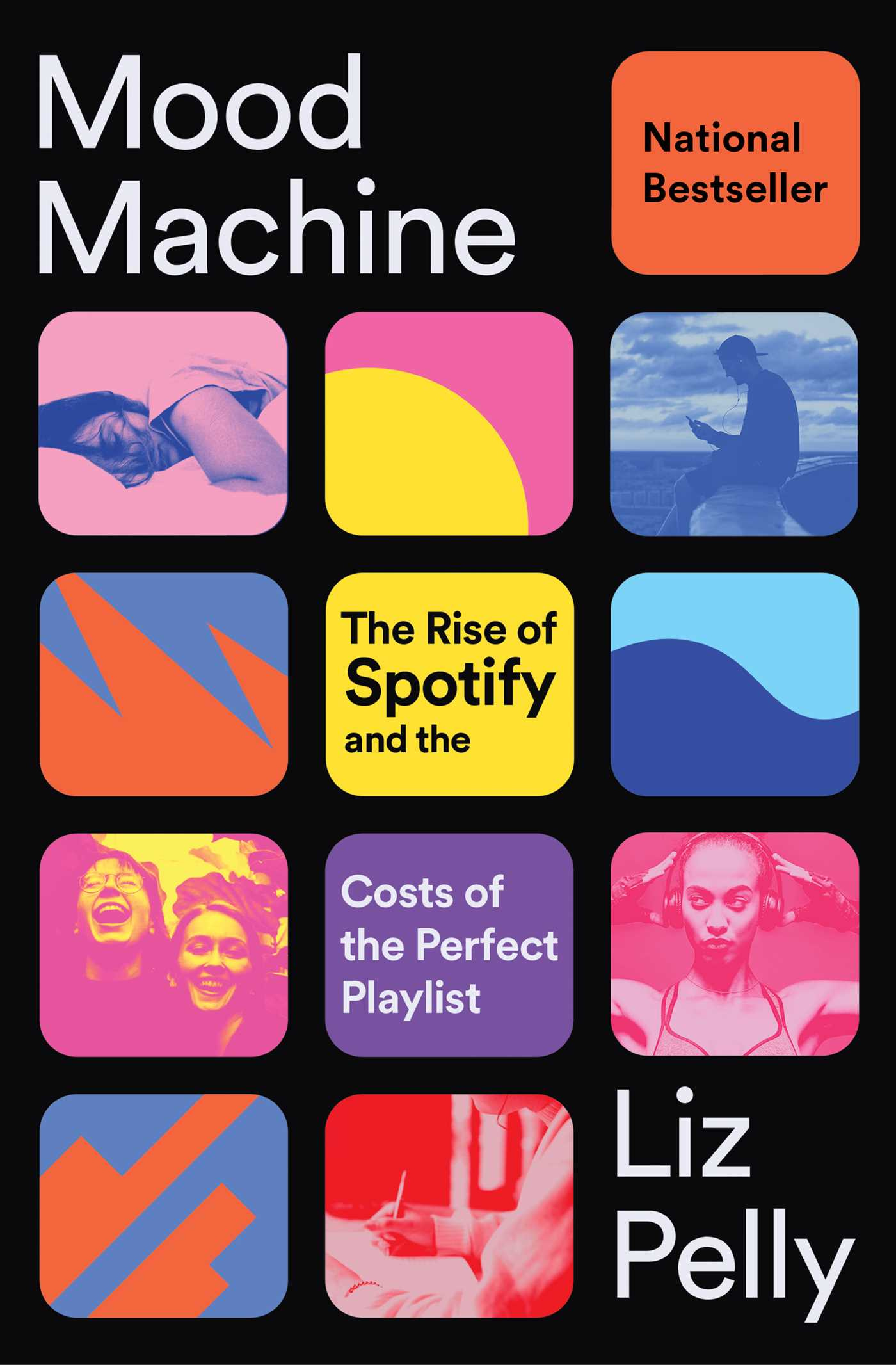
Mood Machine by Liz Pelly
The revolution will not be digitized
Mood Machine by Liz Pelly is a story about how Spotify has monopolized streaming, razed the music industry, and homogenized the culture.
When the story begins, we learn about the origins of the lime green app and its plans for the “revolution” or “democratization” of music. But as Pelly digs deeper it becomes clear that akin to most tech companies, the story is far more banal than portrayed. The co-founders of Spotify originally got their start in ad-tech and during the early days of its founding, they conceived of a platform that would suit their skillsets. Advertising first, content second. It just so happened that due to piracy laws at the time, music was one of the cheapest forms of content around. Thus, Spotify was born.
The company was initially an illegal operation that gained legitimacy over time as they acquired both funding and traction. The founders secured deals with major labels through their investing partners, mercilessly negotiated down the rates they paid to indie arts, and eventually became the Digital Service Provider (DSP) they are today. But Spotify’s ruthless ascension to become a streaming giant is probably the least interesting part of this tale, because what makes the Mood Machine so compelling isn’t the muckraking (although I do enjoy a good ole fashioned takedown of an oligarch) but rather its revelation that Spotify is single-handedly changing the shape of music.
In the 2010s, right as the company was preparing to go public, Spotify executives searched for every possible way to increase profitability. They analyzed the listening habits of their listeners and discovered that many users of the app weren’t actively listening or searching for the best possible music they could find, but rather music that fit a certain occasion. Studying music, driving music, relaxing music, sleeping music. The company stood to gain from the public’s over reliance on background sounds and their fear of silence.
“The vast majority of music listeners, they’re not really interested in listening to music per se. They just need a soundtrack to a moment in their day. I think Daniel Ek (CEO) was the first person to really exploit that. I honestly think that the core of the company’s success was recognizing that they’re not selling music. They’re not providing music. They’re filling people’s time. And he said at a company meeting, I remember he was like, ‘Apple Music, Amazon, these aren’t our competitors. Our only competitor was silence.’” (Pelly, 38)
This passive-listening discovery was pivotal because it meant that the music no longer needed to be good, but rather it just needed to be good enough to help ward off the existential dread-inducing silence its consumers feared. Enter PFC, or perfect fit content.
Through various subcontractors, Spotify hired “ghost artists” or sometimes desperate indie artists, to produce hundreds of tracks for pennies on the dollar. The tracks produced were given loose requirements, but ultimately had to fit a mood or theme of the company’s choosing. Once those tracks were recorded, they were shuffled around on various B-tier playlists until the algorithm picked up the ones most likely to go viral, and put them in the limelight. This system allowed Spotify to both create and distribute music for a fraction of the cost. And while the economy for artists was being decimated, so was the musical landscape.
While Spotify’s data-driven approach to music curation increases user engagement, it comes at the expense of the broader music community. Because as the algorithm assembles these mood-based playlists, it does so with little to no historical or cultural context. This means that every single user is being served a, uniquely vapid listening experience that only they can relate to, a musical silo of sorts. This individualistic approach to listening makes having conversations and building communities around music much more difficult.
Occasionally a listener could have their silo breached by a viral hit, and even if the music was terrible, it is still more comforting to have a glib conversation about a bad song, than no conversation at all. But in a way this virality reinforces isolation, and vice-versa, because when a “top hit” graces a user’s feed, they engage, and immerse themselves in it, not because they care, but because they want to be part of the conversation, part of the community of people that do care. The Spotify algorithm in effect profits off of both the isolation it imposes, and the tenuous communities it creates around these viral, TikTok coded tunes.
Yet, as harrowing as the musical landscape is, Liz Pelly leaves us with a few reasons to be hopeful. Across the world, artists and laborers are engaging in collective action so that they can build a more equitable future. In 2020 the United Musicians and Allied Workers (UMAW) was formed to help fight for a more just industry, the Spotify Workers Union was formed in Sweden to advance employee interests, and in 2024 the “Living Wage For Musicians Act” was introduced by Rashida Tlaib. Even as the company records record profits in the tens of billions, you can still count on artists, workers, and everyday people to fight for the right to live a life of dignity. The Mood Machine may have run amok, but it hasn’t run us over.


